IDs, amounts, quotes, clauses
Anything where a single wrong character matters stays as real text your agent can quote and compare safely. This rule is enforced in code, not policy.
A local tool that shrinks documents for AI agents
Stop paying full price every time your AI reads a document.
AI models bill by the token — roughly a word fragment — and they bill every single time they read a file. Docpipe separates document fidelity from token economy: local PDF backends create source-mapped evidence first, then agents compact only text that clears a measured payoff floor. Numbers, IDs, dates, and quotes stay word-for-word and the original stays one step away.
$ docpipe convert ./2607.12056.pdf --profile markdown_canonical --json --out .docpipe-demo
reading: 189,855 tokens of source PDF
package: source-mapped Markdown, exact recovery handles
kept exact: 176 facts (numbers, IDs, quotes) word-for-word
recovery: every summary points back to the original text
result your agent reads the small package instead of the full PDF.
Estimate your own savings
Drag the slider to a document size and pick the file type. The estimate uses the same measured rates as the charts below — including the honest answer that tiny files are cheaper to read raw.
The research-paper anchor is the actual file measured in the PDF demo below. The novel and tax package are typical sizes for those document classes, not measurements.
Move the slider to see an estimate.
Estimates use the measured rates on this page: 84.1% for large text documents, 54.2% for PDFs, and the measured overhead on tiny files. One token ≈ 4 characters. Prices are dated standard-tier input list prices; caching, batches, discounts, and provider tokenizers can change the real bill.
Install next
Copy one prompt into Claude Code or Codex. Your agent downloads the verified release, installs its Frugal skill, and reports what changed.
One real PDF, before and after
We ran a real research paper (2607.12056.pdf) through Docpipe. The agent gets a package that is roughly half the tokens of the raw PDF. The full original stays on disk for checking and recovery — it just never has to be loaded into the conversation again.
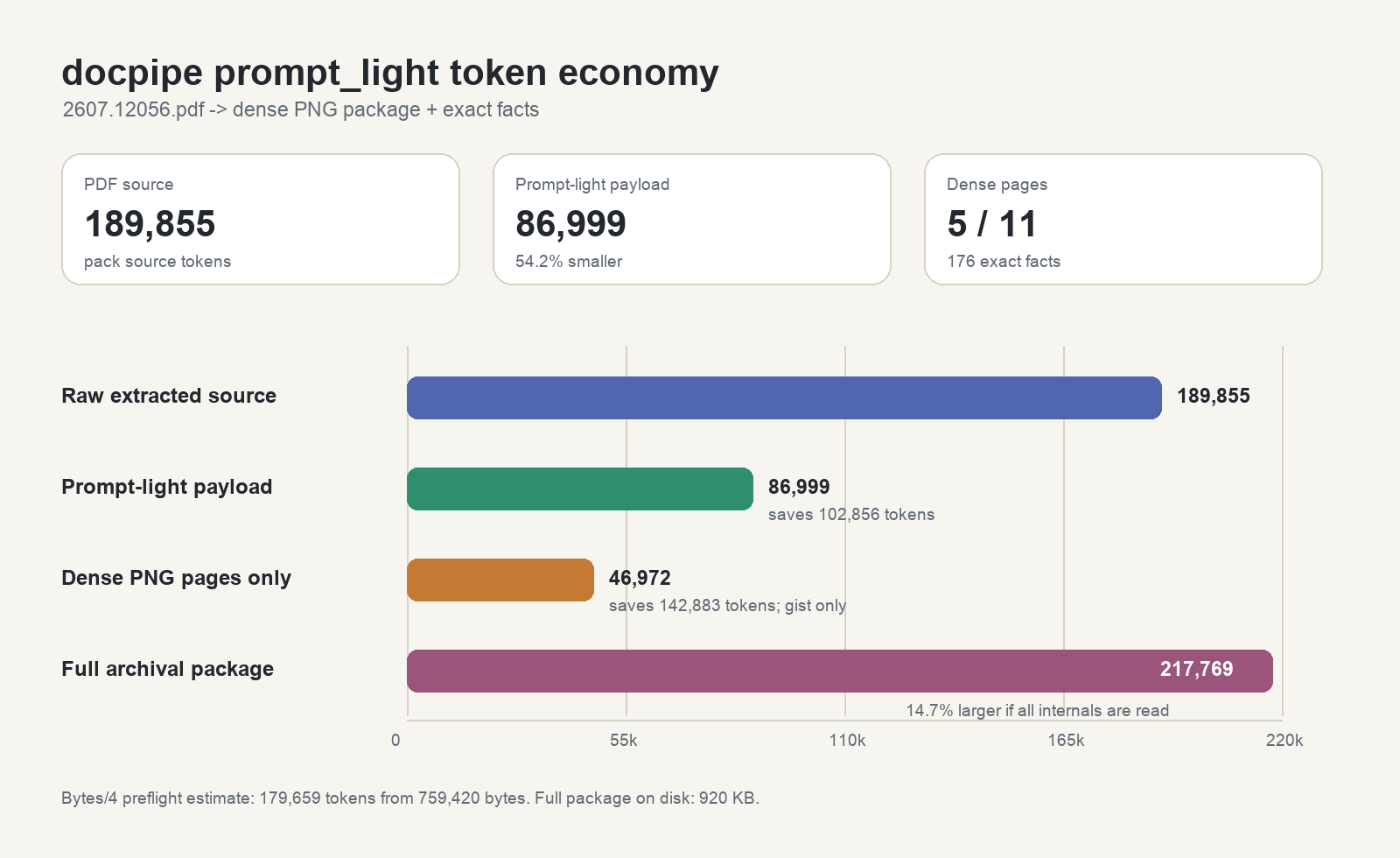
102,856 tokens saved on every single read of this document.
5 / 11 pages were bulky enough to be carried as compact page images ("visual gist") instead of full text — a further 75.3% reduction for background context, never used for exact facts.
Every package gets a stable ID (pdf_ccd97b569aabb51f) so another agent — or you, next week — can pick it up without re-reading the source.
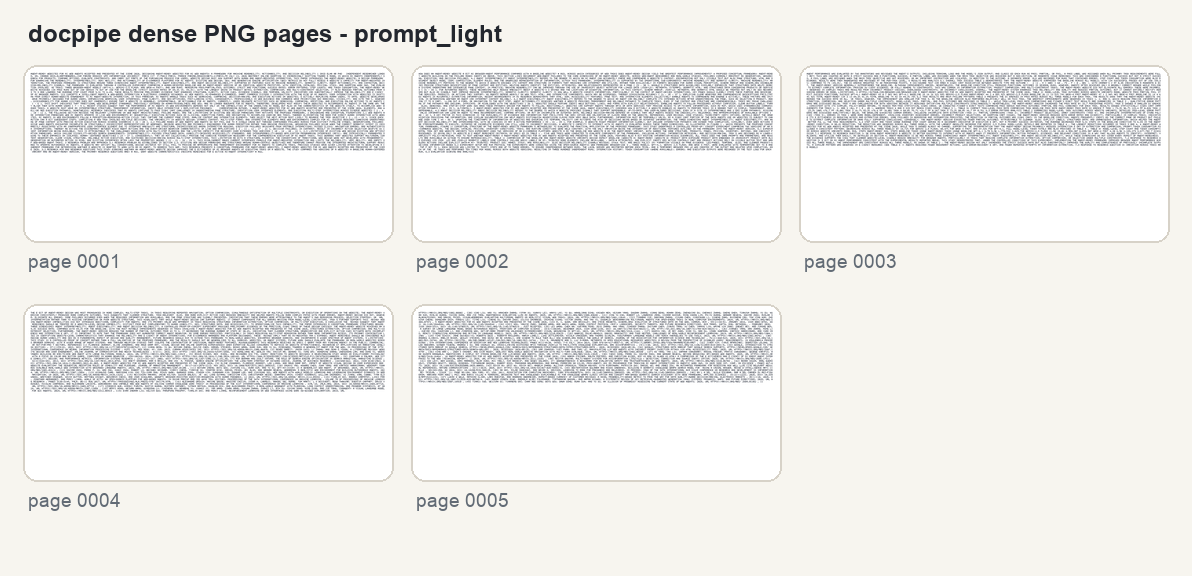
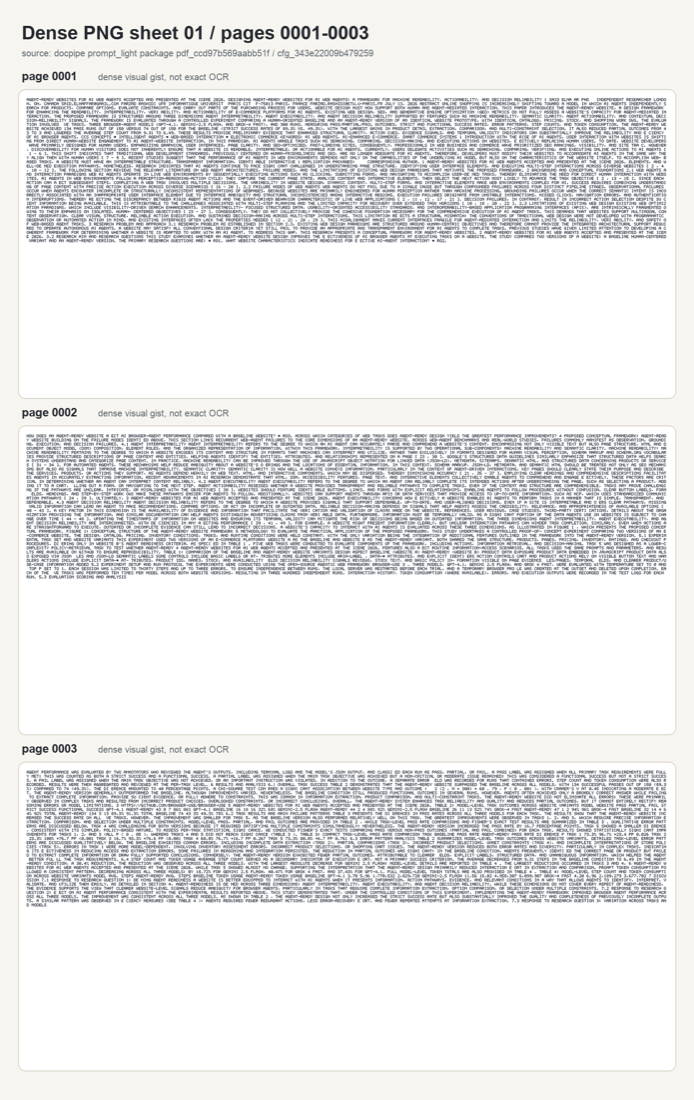
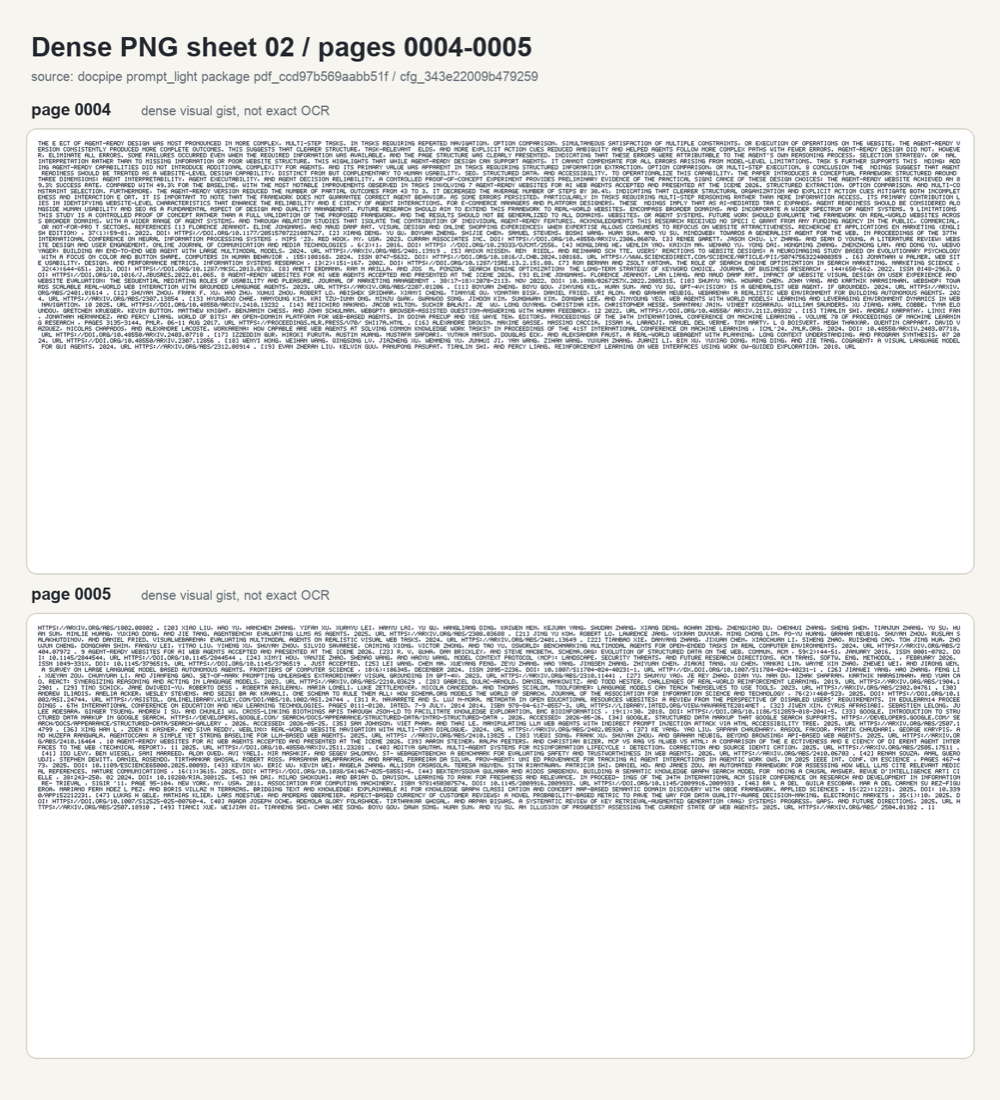
Page images are for background context only, never for exact facts. Anything exact stays as text with a link back to the original.
How it works
Docpipe is a single program that runs on your computer. Your documents never leave your machine — there are no network calls in the conversion path.
The verified installer puts the docpipe CLI on your machine and writes the embedded frugal skill for Claude Code, Codex, or both.
Exact facts — numbers, IDs, dates, quotes — stay as text, word-for-word, always. Bulky background gets compressed hard. Everything keeps a handle pointing back to the original, so nothing is ever truly gone.
Every read of the package instead of the raw file is tokens — and money — saved. When another agent picks up the work, it receives the package ID, not a 190,000-token paste.
The safety rule behind everything
Anything where a single wrong character matters stays as real text your agent can quote and compare safely. This rule is enforced in code, not policy.
Long descriptive passages become compact summaries or page images — good enough to understand the gist, cheap enough to carry everywhere.
Every compressed piece points back to the exact original text. If a task suddenly needs the fine print, the agent fetches just that piece — not the whole file.
Output formats
You ask for what you want in plain language. Available today: clean Markdown conversion. The rest are on the public build roadmap below, gated behind measured verification — not shipped until proven.
Available now Turn a document into clean Markdown plus a source map that records where every piece came from.
Coming next A ready-to-paste bundle: instructions, contents, exact facts, and key excerpts, sized for a model's context window.
In progress The smallest possible input — like the PDF demo above. Deliberately lossy, so it unlocks only for AI models that pass measured verification.
Planned Chunks, metadata, and source maps ready for search and retrieval systems. Anything inferred is labeled as inferred.
Planned Full internals and diagnostics for QA, legal, and compliance review — see exactly what was kept, compressed, and why.
Get started
Hand one install prompt to Claude Code or Codex. It verifies the release, installs its own Frugal skill, and tells you exactly what changed.
The installer verifies SHA-256 release checksums. Code signing and an explicit self-update command remain separate release work.